You are using an out of date browser. It may not display this or other websites correctly.
You should upgrade or use an alternative browser.
You should upgrade or use an alternative browser.
Photography Tips and Tricks
- Thread starter Rizwan
- Start date
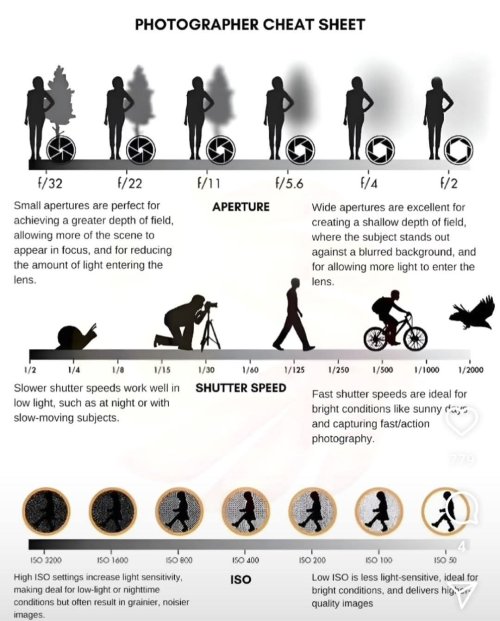
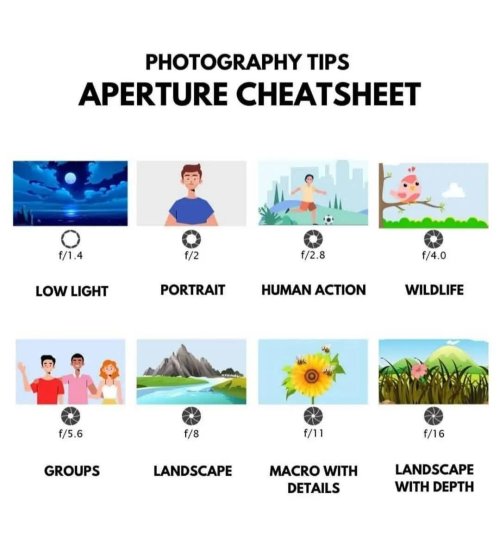
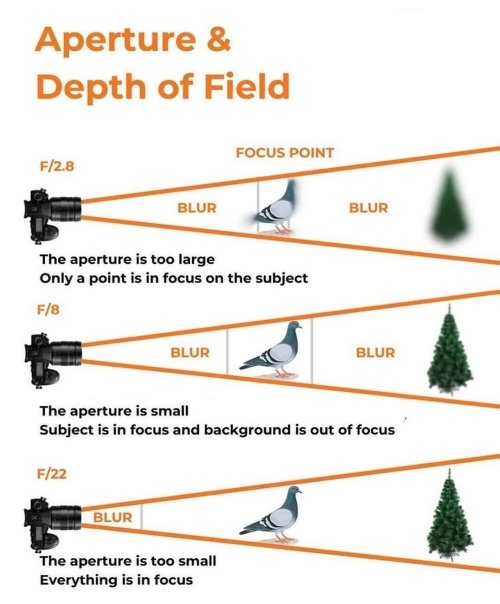


Wildlife photography is a mix of good settings, patience and being ready when things suddenly happen.
Gear matters but technique matters more. A good lens, fast shutter speed and understanding how aperture and ISO work together will make a far bigger difference than chasing camera bodies.
A few key points worth keeping in mind:
• Shutter speed is critical. Fast-moving animals and long lenses usually mean 1/1000s–1/2000s or faster
• Aperture is often a balancing act. Wider apertures help keep shutter speeds high, but stopping down slightly can improve sharpness and give you more depth of field on larger animals
• ISO isn’t something to fear. It’s better to accept a bit of noise than miss focus or motion entirely
This infographic covers the foundations:
• Why lenses matter more than camera bodies
• Why crop-sensor cameras can be an advantage
• Focal length choices for different wildlife scenarios
• Fieldcraft tips like shooting at eye level and working with the light
Wildlife photography rewards preparation but also flexibility. Nail the basics and you’ll be ready when the moment finally happens.
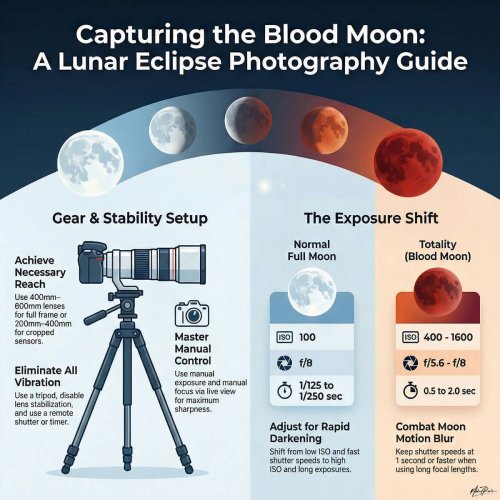
With a blood moon happening very soon, I want to arm you with this knowledge so you’re not scrambling with settings when it turns red.
Here in Melbourne Australia (where I live), totality is expected to be in full effect from around 10:30pm, which means the moon will shift from a bright, normal full moon to a much darker, deep red tone. That’s where many people get caught out.
A normal full moon is actually very bright because it’s reflecting direct sunlight. That’s why typical starting settings look something like:
 Normal Full Moon
ISO 100
f/8 - f/11
1/125 – 1/250 sec
But once totality begins and it becomes a blood moon, it darkens significantly. You’ll likely need something closer to:
 During Totality
ISO 400 – 1600
f/5.6 – f/8
0.5 – 2 sec
Now, these are just rough starting points.
All cameras are different.
Different sensors handle high ISO differently.
Full-frame cameras generally cope better with noise than older crop sensors.
Longer focal lengths require faster shutter speeds to avoid motion blur.
Atmospheric conditions can change exposure dramatically.
So, treat these settings as a guide, not a rule.
A few things matter more than exact numbers:
• Use a tripod
• Turn off stabilization when mounted
• Shoot in manual mode
• Focus manually using live view
• Use a remote shutter or 2 second timer
• Adjust as the eclipse progresses
Also remember, the moon moves. At 400mm or longer, even a 1–2 second exposure can introduce motion blur. If possible, try to keep shutter speeds around 1 second or faster and compensate with ISO.
And don’t forget, sometimes the best shot isn’t a tight crop. A blood moon rising over a skyline, trees, or a landscape can tell a much stronger story than a frame filled entirely with the moon.
If you’re heading out tonight, test early and adjust as the light drops. Most importantly, enjoy it. These moments don’t come around often.
Hoping for clear skies tonight, Melbourne


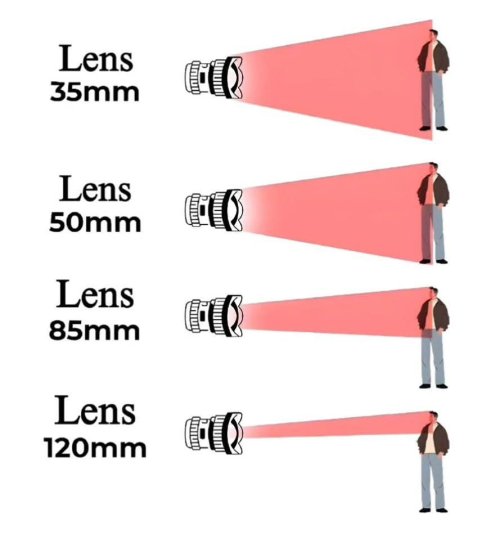
 How does the lens completely change the shape of the portrait?
Many filmmakers and photographers believe the secret is in the camera...
But the fact is the lens makes the image shape.
In this instance, we see the same person, but with different lenses:
 35mm lens
This lens is relatively wide
✔ background shows more
✔Gives a sense of place around the person
✔ Excellent for Environmental Portraits (portrait with environment)
But sometimes if you get too close to a person you can give a slight distortion in the features.
 50mm lens
Often referred to as the natural lens
✔ A very close perspective of what the eye sees
✔ Facial features should be natural
✔ Suitable for portrait and public photography
This is why many photographers consider it the best starting point.
85mm lensThis is where the true portrait magic begins.
✔ Isolate the person from the background
✔ it gives a soft bouquet
✔ Background compresses beautifully
✔ Make facial features more consistent
That's why it's the lens of choice for professional portraits.
120mm lensLonger lens gives a more cinematic feel.
✔ Strong pressure for the background
✔ Full focus on the person
✔ Tight frame without distortion
Great for Headshots and Cinematic footage.
 The summary of filmmakers and photographers:
The lens is not just a number...
She Who Determines:
• SHAPE OF THE FACE
• The size of the background
• Depth of the Image
• The cinematic sense of the scene
Choosing the right lens can transform an ordinary photo into a professional shot.
#Filmmaking
#Cinematography
#PortraitPhotography
#PhotographyTips
#CameraLens
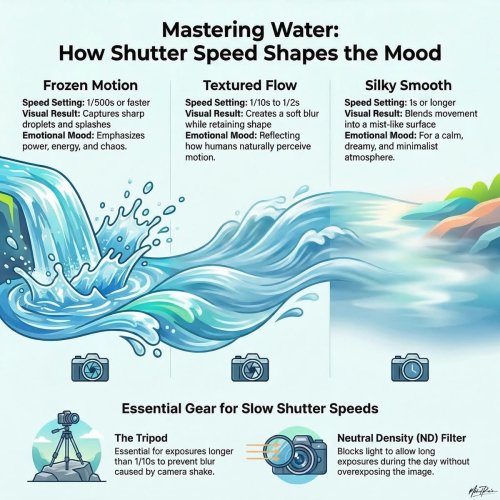
 One scene... three completely different photos.
The difference?
 Just your shutter speed.
A lot of people think better photos come from better gear but in reality, it’s often just understanding how to use the settings you already have.
Water is a perfect example of this.
Use a fast shutter speed and you’ll freeze every droplet and splash — giving you a powerful, energetic image.
Slow it down a bit, and you introduce motion while still keeping some detail — that natural “flow” look.
Go slower again, and everything blends together into that smooth, silky effect you see in a lot of landscape photos.
Same location. Same camera.
Completely different results.
That said — the settings in this infographic are just guidelines and examples.
Every situation is different.
The speed of the water, how close you are, your focal length, your camera, your lens, and even your creative intent will all change what settings actually work best. Fast-moving waves will behave very differently to a slow river, and what works in one scene might not work in another.
There’s no single “correct” shutter speed — it all comes down to the look you’re trying to achieve.
Also worth keeping in mind…
Once you start using slower shutter speeds (around 1/10s and beyond), even tiny movements from your hands can soften the image — which is why a tripod becomes essential.
And if you’re shooting during the day, you’ll often need an ND filter to cut down the light so you can actually reach those slower shutter speeds.
This is one of those simple concepts that can completely transform your photos.
Next time you’re near water, don’t just take one shot —
try a few different shutter speeds and see what you like best