

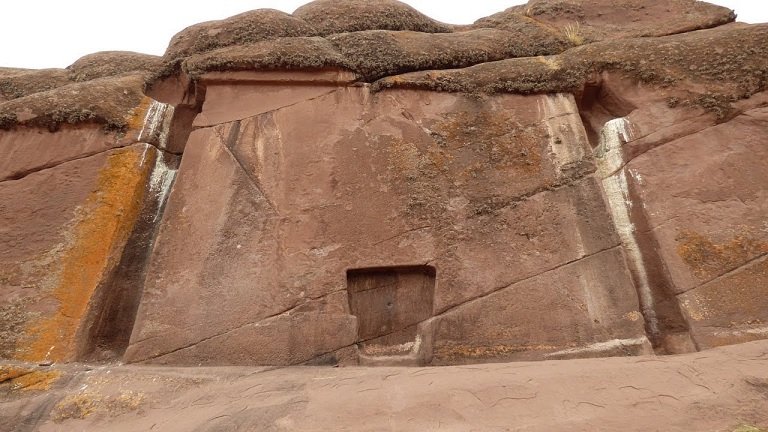
On the side of Mount Hayu Marca, in southern Peru, a large, mysterious stone doorway is carved into the rock. Although no one knows the true origins of the Aramu Muru Gate, it points to a long and complex history of ancient Peruvian culture.
In 1996, near Lake Titicaca, local guide José Luis Delgado Mamani came across a mysterious structure. Since its discovery, Aramu-muru, or "Gate of the Gods", has been surrounded by myths and legends about its construction and use.
For the last 4,000 years, ancient indigenous communities lived near the mountains and Lake Titicaca, including the Inca civilization, which was once ruled by Pachacuti Inca Yupanqui. The Incas believed that this huge lake was the birthplace of the world and the place where a person's spirit returns after death.
It is widely believed that the site of Aramu Muru served as a place of pilgrimage and worship for the Incas, and that according to local legends the doorway has supernatural properties.
They are believed to have been used for ceremonial or astronomical purposes. The magnificent structure, 7 meters high and 7 meters wide, has a small door-shaped recess in the center. Those who visit this structure claim that by placing their foreheads on the small depression they feel safe and at peace.
Although little is known about the origins of the door, it is believed to have existed before the Incas, and stories of its use come from a number of Indian communities.
According to mythology, the doorway is a portal or "stargate" used to travel to other worlds. Some also believe that the gods use this door to visit and inspect their domains.
The Aramu Muru are believed to have been created before the Incas.
It is said that while hiding from the Spaniards, an Incan priest named Aramu Muru took a golden sun disk known as the "key of the gods of the seven rays" that was kept in the Coricancha Temple in Cuzco. After walking more than 450 kilometers from the temple to the stone doorway, the priest placed the disk on the door. The doorway allegedly opened and the priest walked through and disappeared.
While belief in the legend may be a source of solace for some, the story of Aramu Muru is also a stark reminder of the tragedy that an ancient civilization endured when it was devastated by the Spanish conquistadors.