

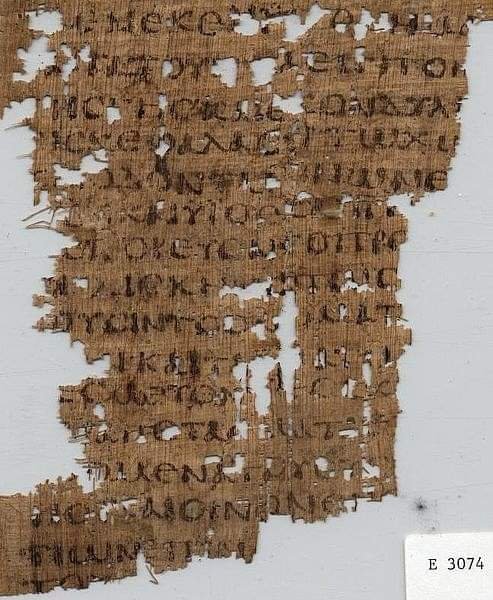
The Book of Amos is a prophetic book of the Hebrew Bible largely dating to the 8th century BCE and considered to be scripture by modern-day Jews and Christians. The work chronicles the visions that the ancient author of this book believed he received from God in order to warn Israel of its impending doom and destruction unless it restores its religious duties to God instead of engaging in the evil and sin that Amos believes has been pervading throughout his country, both in the kingdoms of Israel and in Judah. Naturally, the book also takes place in Israel, as Amos prophesies and preaches to the inhabitants of this land of the judgement of God.
Dating
The Book of Amos is considered one of the earliest biblical books by scholars, as it dates to the middle of the 8th century BCE. Amos informs us that he is writing during the reigns of Jeroboam II and Uzziah, both of whom are biblical kings known from the archaeological record to have reigned from the 8th century BCE. Secondly, Amos states that he is writing two years before a major earthquake (Amos 1.1), an earthquake that has been identified by geologists and known to have devastated Israel somewhere during the middle of the 8th century BCE. Thirdly, in the sixth chapter of Amos (Amos 6.1-2), Amos talks about the destruction of three known ancient cities. These cities are of Calneh, Hamath, and Gath, and are used by Amos to demonstrate to Israel what will happen to them if they do not obey God. The only period in which all three of these cities were destroyed around the same time is c. 900 BCE, and thus Amos was likely writing soon thereafter. According to the scholar Aren Maeir;
It would appear, therefore, that the only viable historical and geopolitical context in which the destruction of Gath, Calneh and Hamath Rabah would be mentioned together would have existed not long after the late 9th century BCE. Later, although Calneh and Hamath continued to be important cities, Gath lost its prominent role. Consequently, one should assume that this passage is to be associated with the original text of the Book of Amos, most consonant with the first half of the 8th century BCE. Attempts to date it to a later stage and to suggest alternative contexts for the reference to these three cities appear to fly in the face of the available historical, biblical, and archaeological evidence. (327-328) #Bible #BookofAmos #Judah