

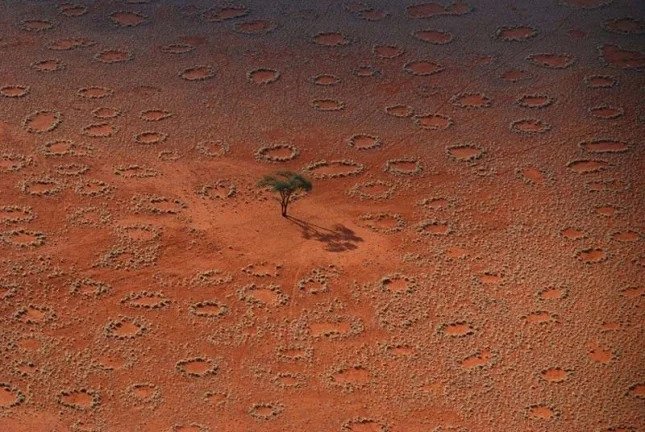
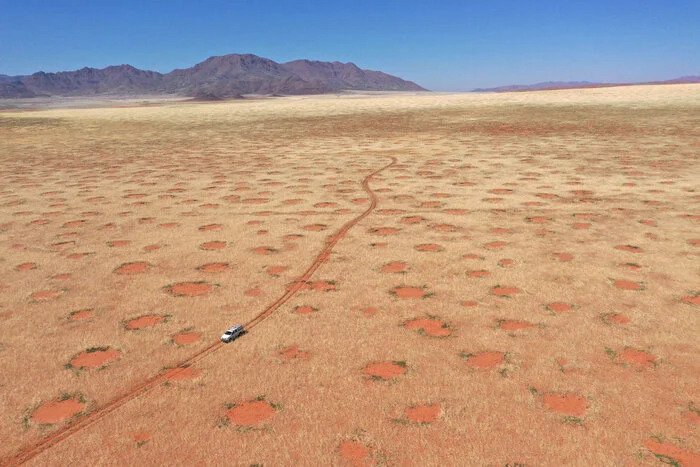
In far, far away Africa lies the vast Namib Desert. And within it are areas mysteriously covered in circles. Although, it would be more accurate to say that the land is not covered in circles, but in grass, the carpet of which contains thousands of circles where the grass doesn't grow.
The local aborigines attributed this unusual landscape to the intervention of witchcraft, and the colonizers who arrived in Namibia supported the superstition, calling the circles "witch circles."
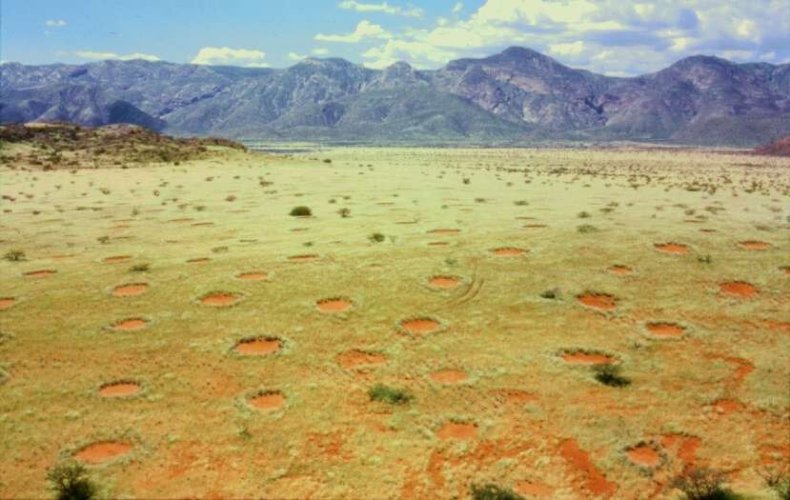
Fortunately, in our world, beyond superstition, there's also science, and with it, the scientific method of research. So, while it took a while, scientists were able to solve the problem posed to them by nature.
Armed with modern research tools, they comprehensively studied the chemical composition of the soil, the species composition of grasses, and the region's climatic conditions. One curious detail emerged.
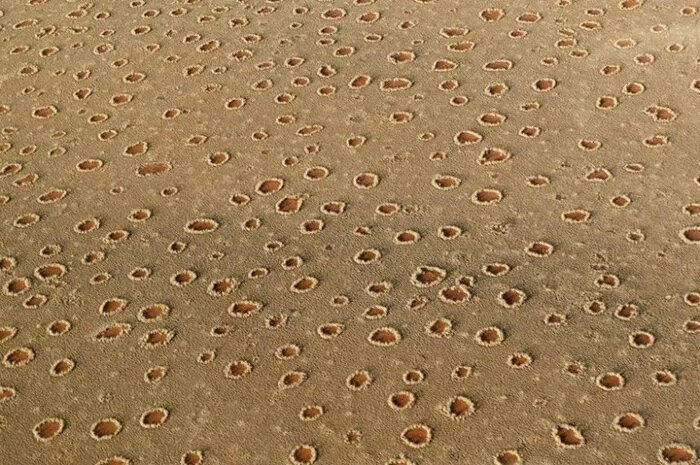
During the rainy season, the entire ground was covered with grass, and seeds that fell into the circle sprouted peacefully, and the grass flourished. No abnormalities or diseases were observed within the circle.
With the onset of the dry season, the grass inside the circle simply dried out. Soil moisture measurements yielded surprising results. Water movement in the soil occurred horizontally. This was because the grass roots acted like vacuum pumps, literally sucking water from the soil. Their force was so great that horizontal water movement was observed within seven meters of the roots.
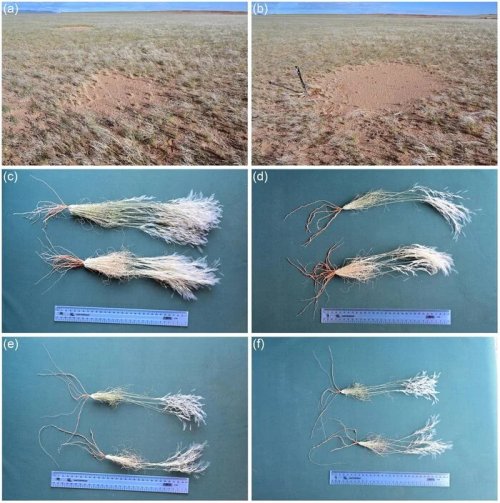
As a result, each plant tried to draw water to itself. This struggle resulted in dehydrated patches, where the losing plants simply burned out. During the next rain, these circles, with no consumers left within them, became reservoirs from which the surrounding plants drew water.
So, we can say that we are dealing with a complex hydraulic structure created not by man or animal, but by a plant! Nature, as always, finds ways to surprise us
Well, that's all from me. I hope you found my short essay entertaining. It's based on material from my Telegram channel "Planetians." If you're interested in learning about the unusual nature of our planet every day, I invite you on board: