Makli Necropolis related Documents Notes Researches

Danish Qazi

Member
Staff member
Makli-Thatta-1-1-870x555.jpg

Overview​

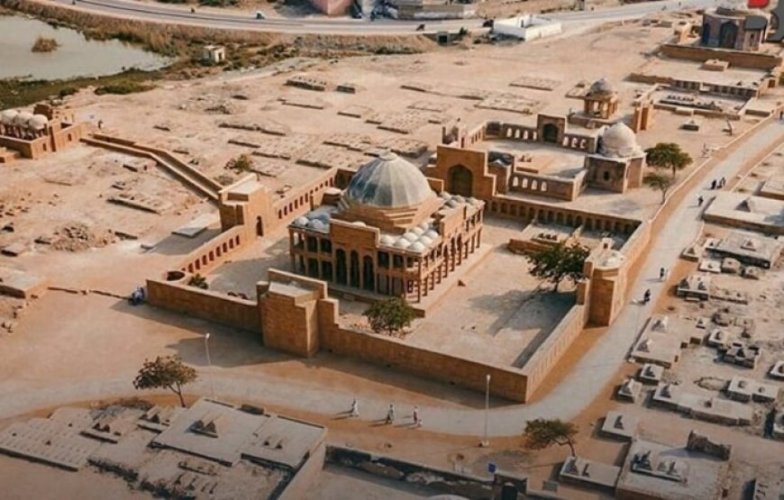
About 100 kilometers east of Karachi, in the historic city of Thatta, lies the Makli Necropolis, one of the largest and most fascinating graveyards in the world — and a UNESCO World Heritage Site. Spanning over 10 square kilometers, Makli is home to nearly half a million tombs and monuments, making it a remarkable testament to the art, culture, and history of Sindh. For anyone interested in history, architecture, or simply seeking a serene and awe-inspiring day excursion to Makli Necropolis offers an unforgettable experience.
The necropolis dates back to the 14th century and flourished for over 400 years as a sacred burial site for saints, rulers, scholars, and soldiers. Its elaborate tombs and mausoleums showcase an extraordinary fusion of Islamic and Hindu architectural styles, reflecting the diverse cultural influences that shaped the region over centuries. Crafted from sandstone, brick, and glazed tiles, the monuments are adorned with intricate carvings, calligraphy, and geometric designs that leave visitors marveling at the craftsmanship of the artisans who built them.
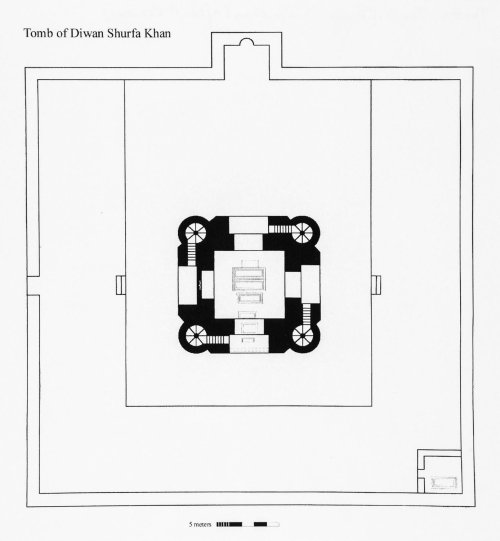
Walking through Makli, visitors encounter rows of beautifully preserved — and some hauntingly weathered — tombs, each telling the story of a different era and personality. Among the most striking structures are the tombs of Jam Nizamuddin, Isa Khan Tarkhan II, and Diwan Shurfa Khan, whose imposing facades and detailed ornamentation stand as a testament to the grandeur of the past.
What makes Makli even more special is its serene atmosphere. Surrounded by arid hills and open skies, the necropolis offers a sense of tranquility and reflection, far removed from the bustle of Karachi. Photographers, history enthusiasts, and casual visitors alike find Makli to be a deeply moving and enriching place to explore.
 

Attachments

  • Reactive Monitoring Report on Historical Monument at Makli Thatta.docx.pdf
    1.9 MB · Views: 0

Makli Sindhi Islamic Architecture consolidation Techniques (Anastolysis)​

Javaria Manzoor Shaikh
 

Attachments

  • Makli_Sindhi_Islamic_Architecture_consolidation_Te.pdf
    759.3 KB · Views: 0

Conservation and Development plan of Makli Hill Monuments Thatta​

By Ali Hyder
The Complex of Makli Monuments Thatta lies about 100 km east of Karachi and includes the greatest Muslim Necropolis in the world. It has witnessed the successive rise and fall of various ruling dynasties during the four hundred years of its chequered history. It remained under the rule of the Summa Rajputs (1340-1520), the Arghuns (1520-1555), the Turkhans (1555-1592) and the Mughal emperors of Delhi (1592-1739). During these four centuries Thatta was one of the centres of Islamic learning, fine arts and handicrafts, as well as flourishing part of continental trade in the east. Its commercial, intellectual and cultural greatness during the 16 th and 17 th centuries was unrivalled both i. Asia and Europe. The European travellers impressed by its charm and prosperity, called it an " ELDORADO " a utopia of wealth beyond avarice. Makli Monuments present an impressive order of various monumental buildings finished in several architectural styles. In this necropolis are buried kings and queens, governors, saints and scholars, philosophers of a bygone era. While going from southern to
 

Attachments

  • Conservation_and_Development_plan_of_Mak.pdf
    127.3 KB · Views: 0

Makli Sindhi Islamic Architecture consolidation Techniques (Anastolysis)​

  • J. Shaikh
  • Published 2014
  • History, Engineering
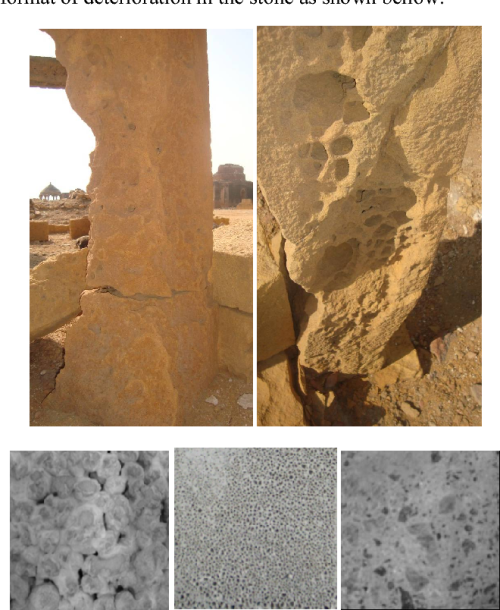
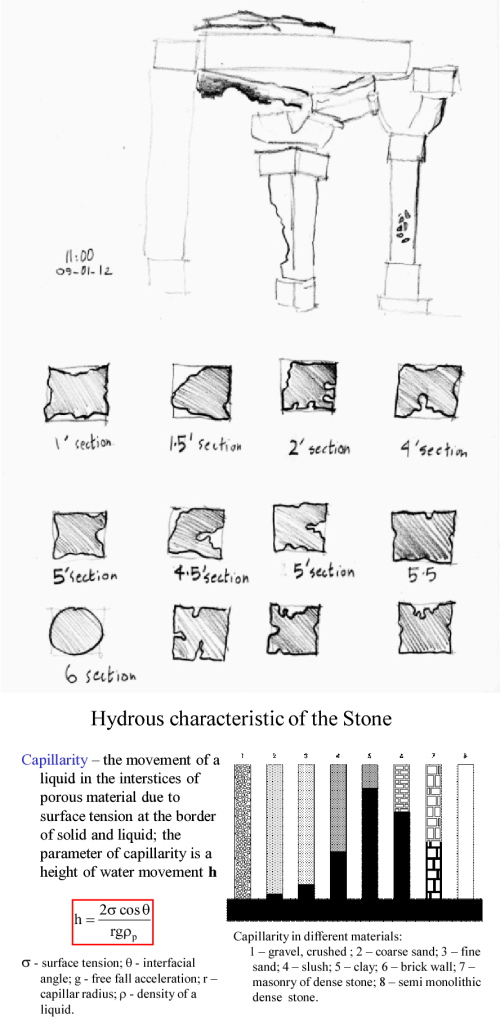
The semi monolithic site of Makli is of critical importance in terms of understanding the socio-economic processes present at this time in the Sindh, Pakistan. Scholars have drawn conclusions about the semi monolithic technologies employed at later historic sites at Makli, based on attributes identified within experimental datasets. This research aims to show that the interpretation of the relationship between the experimental and archaeological datasets and questions the monolithic production strategy is shown to be constrained by the quality of the raw material. This interpretation and the association of these sites with a distinctive personal have important implications for our understanding of regional settlement systems and the placement of the graves at this sacred site. Here there is a discussion on how to use the process of anastolysis, since there is a need to conduct the alastolysis process for the site, for the reassembling of the un assembled parts.
4-Figure3-1.png
2-Figure1-1.png
 
Architectural Documentation of Jam Nizam-Al-DinSamoo Tomb, Makli, Thatta1Architect Mushtaque Ali Khooharo, 2Prof. Dr.Bhai khan Shar, 3Prof. Manik Mustafa Shar, 4Architect BilawalSathio, 5Prof. Atta-Ul-Munim Bullo, 6Asst. Prof. Hina Marvi
 

Attachments

  • 1564475848_fa8cdb1692_2_irjiet.pdf
    538.5 KB · Views: 0

Makli -Jewel of Sindh- Zulfiqar Ali Kalhorol​

By Zulfiqar Ali Kalhoro
 

Attachments

  • Makli_Jewel_of_Sindh_Zulfiqar_Ali_Kalhor.pdf
    698.5 KB · Views: 0
Back
Top