

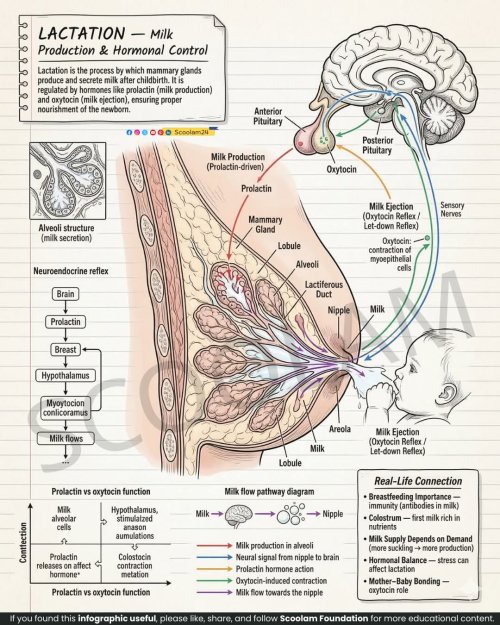
Lactation is the process by which the mammary glands produce and secrete milk to nourish a newborn. It begins after childbirth and is regulated by key hormones.
The hormone prolactin, released from the anterior pituitary gland, stimulates the production of milk in the mammary glands. The hormone oxytocin, released from the posterior pituitary, causes the ejection (let-down) of milk by contracting the milk ducts.
Milk provides essential nutrients, antibodies, and growth factors, supporting the baby’s nutrition, immunity, and development. Early milk, called colostrum, is especially rich in antibodies that help protect the newborn from infections.
Lactation is maintained through a feedback mechanism, where frequent suckling increases hormone release and promotes continued milk production.
#Lactation #BreastMilk #InfantNutrition #Hormones #MedicalEducation