

Did you know the Dead Seaholds some of the most extraordinary natural phenomena on Earth?
---
Lowest point on Earth
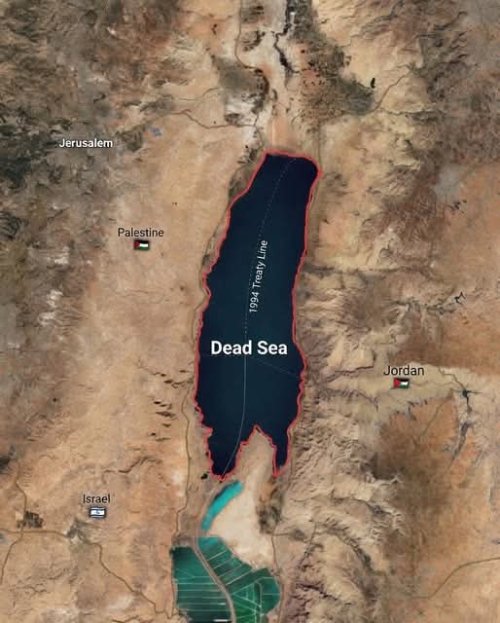
The surface and shores of the Dead Sea sit about 430 meters (1,410 ft) below sea level, making it the lowest land elevation on the planet.
Not technically a sea
Despite its name, it is actually a hypersaline endorheic lake — meaning it has no outlet, causing massive mineral accumulation.
Almost impossible to sink
Its salinity is around 34%, nearly 10 times saltier than the ocean, creating such high density that the human body floats effortlessly.
Almost no visible life
The name comes from the absence of fish, aquatic plants, or birds. Only certain microscopic bacteria and fungi can survive in its extreme conditions.
Unique mineral concentration
The Dead Sea contains more than 20 different minerals, including magnesium, potassium, and calcium — many rarely found together elsewhere.
The world’s oldest natural spa
Historical accounts suggest that Herod the Great and Cleopatra used its mud and waters for cosmetic and therapeutic treatments thousands of years ago.
Therapeutic black mud
Mud from the lakebed is famous for helping treat skin conditions such as psoriasis and rheumatism and is exported worldwide as a luxury wellness product.
Natural sun protection
Because of its low elevation, extra atmospheric layers filter harmful UV radiation, allowing visitors to sunbathe longer with reduced risk of sunburn.
Floating asphalt
A rare phenomenon occurs when natural asphalt blocks rise from the depths — material once used by ancient Egyptians in mummification.
Extreme evaporation
The lake loses roughly one meter (about 3 ft) of depth each year due to intense desert heat, continually increasing its salinity.
Oxygen-rich air
Air in the region contains about 10% more oxygen than at sea level, often creating a feeling of well-being and benefiting people with respiratory issues.
Water with an oily texture
Because of its mineral density, the water feels oily or slightly viscous rather than like normal freshwater or seawater.
Giant salt crystals
Along the shores, natural salt formations resemble crystal sculptures or white stalagmites — a spectacular sight popular with photographers.
Dangerous sinkholes
As water levels drop, surrounding ground collapses, creating thousands of massive sinkholes that have forced entire beaches to close.
Ancient biblical discoveries
Nearby caves revealed the famous Dead Sea Scrolls, the oldest known biblical manuscripts, preserved by the region’s extremely dry climate.
---
Lowest point on Earth
The surface and shores of the Dead Sea sit about 430 meters (1,410 ft) below sea level, making it the lowest land elevation on the planet.
Not technically a sea
Despite its name, it is actually a hypersaline endorheic lake — meaning it has no outlet, causing massive mineral accumulation.
Almost impossible to sink
Its salinity is around 34%, nearly 10 times saltier than the ocean, creating such high density that the human body floats effortlessly.
Almost no visible life
The name comes from the absence of fish, aquatic plants, or birds. Only certain microscopic bacteria and fungi can survive in its extreme conditions.
Unique mineral concentration
The Dead Sea contains more than 20 different minerals, including magnesium, potassium, and calcium — many rarely found together elsewhere.
The world’s oldest natural spa
Historical accounts suggest that Herod the Great and Cleopatra used its mud and waters for cosmetic and therapeutic treatments thousands of years ago.
Therapeutic black mud
Mud from the lakebed is famous for helping treat skin conditions such as psoriasis and rheumatism and is exported worldwide as a luxury wellness product.
Natural sun protection
Because of its low elevation, extra atmospheric layers filter harmful UV radiation, allowing visitors to sunbathe longer with reduced risk of sunburn.
Floating asphalt
A rare phenomenon occurs when natural asphalt blocks rise from the depths — material once used by ancient Egyptians in mummification.
Extreme evaporation
The lake loses roughly one meter (about 3 ft) of depth each year due to intense desert heat, continually increasing its salinity.
Oxygen-rich air
Air in the region contains about 10% more oxygen than at sea level, often creating a feeling of well-being and benefiting people with respiratory issues.
Water with an oily texture
Because of its mineral density, the water feels oily or slightly viscous rather than like normal freshwater or seawater.
Giant salt crystals
Along the shores, natural salt formations resemble crystal sculptures or white stalagmites — a spectacular sight popular with photographers.
Dangerous sinkholes
As water levels drop, surrounding ground collapses, creating thousands of massive sinkholes that have forced entire beaches to close.
Ancient biblical discoveries
Nearby caves revealed the famous Dead Sea Scrolls, the oldest known biblical manuscripts, preserved by the region’s extremely dry climate.