What is the Bab el-Mandeb Strait and why is it significant?
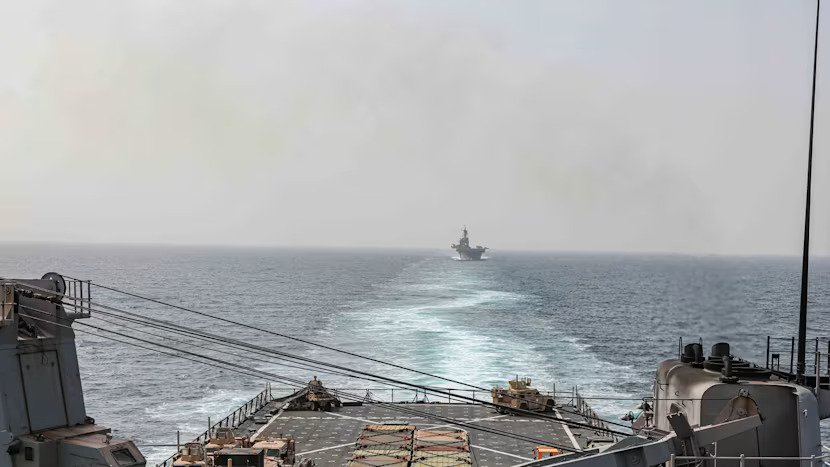
US naval ships sailing through the Bab el-Mandeb in 2023.Credit: US Navy/AP
ITV News understands that Iran’s allies, the Houthis in Yemen, are threatening to close a major trade route between Europe and Asia.
There is real concern that an expansion of the war will see the Houthis engage and disrupt shipping through Bab el-Mandeb, which lies between Yemen and Djibouti, according to intelligence sources in the region.
What is the Bab el-Mandeb?
The Bab el-Mandeb, Arabic for “Gate of Tears” or “Gate of Grief”, is a maritime strait separating the Horn of Africa from the Arabian Peninsula.
Its positioning makes it one of the most important shipping routes in the world.
The narrow passage forms a key commercial chokepoint, connecting the Red Sea, which leads to the Suez Canal, with the Gulf of Aden, which opens into the Indian Ocean.
Where is the Bab el-Mandeb located?
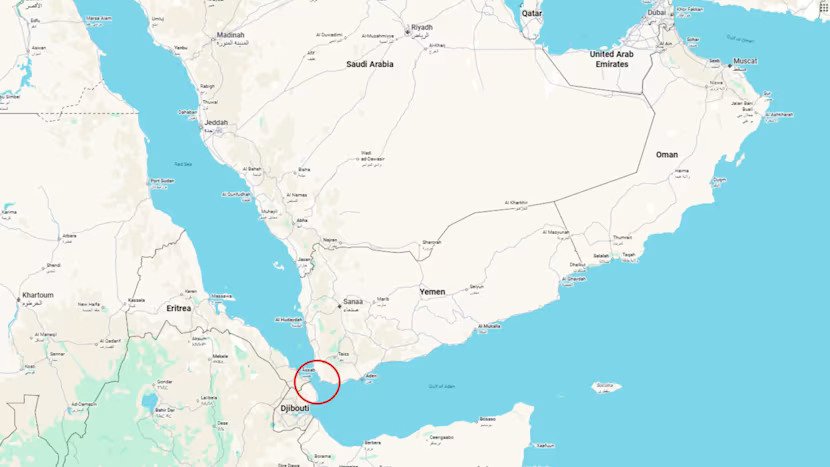
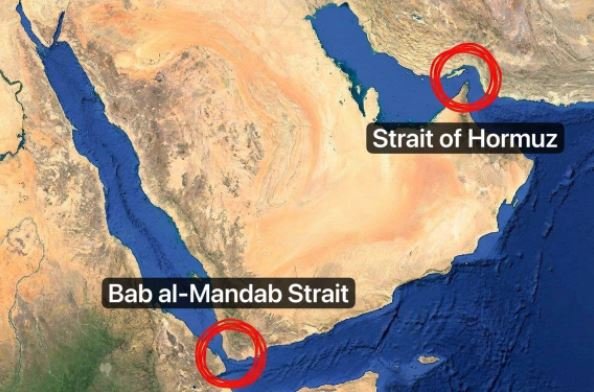
The Bab el-Mandeb lies between Yemen and Djibouti at the southern end of the Red Sea.
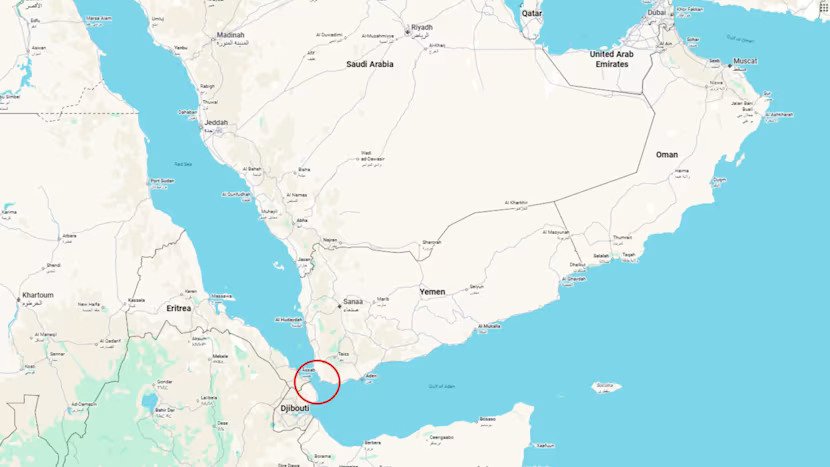
Map locating the Bab el-Mandeb Strait
What is the strait's significance and what would disruption mean?
At only 20 miles wide and 70 miles long, the Bab el-Mandeb geographically small, but vastly influential when it comes to global affairs.
It is a gateway for ships travelling between Europe, the Middle East, and Asia via the Suez Canal.
Several billion tons of cargo pass through the narrow waterway every year, including crude oil and manufactured goods.
Without the Bab el-Mandeb being operational, vessels may be forced to reroute.
All the alternative shipping options, such as going around the Cape of Good Hope, would add significant time to the cargo's journey.
Any such disruption of traffic would have a near-immediate impact on the availability and cost of imports such as electronics, household goods, clothing, and toys, among other things.
In terms of oil, the strait provides a route for oil and liquefied natural gas to Europe.
Who are the Houthis?
The Houthis are a political-military movement from northern Yemen, allies of Iran.
Yemen controls the Bab el-Mandeb, and the Houthis have, in previous years, used the strait strategically by threatening shipping.
Blocking the route would allow the Houthis to participate in indirect confrontation, by disrupting international shipping.
Source: