

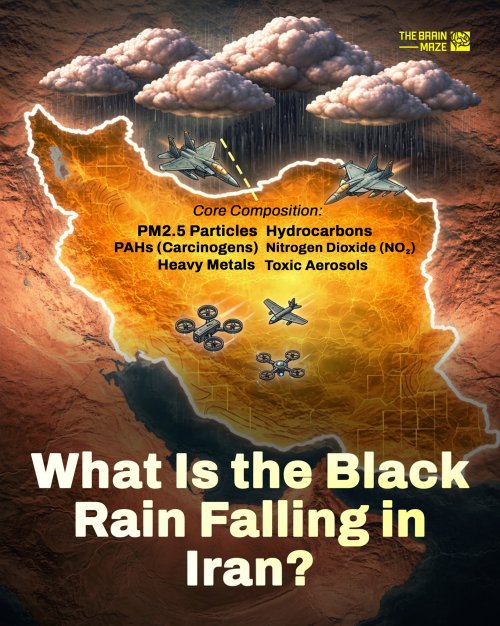
A “black rain” is falling over parts of Iran following recent airstrikes on oil depots, as massive fires release thick clouds of smoke and toxic pollutants into the atmosphere. As rainfall passes through this heavily contaminated air, it absorbs soot, hydrocarbons, and ultrafine particles, turning it dark and chemically hazardous. Scientists say this goes beyond typical acid rain, likely containing dangerous compounds such as polycyclic aromatic hydrocarbons, heavy metals, and other byproducts of burning fuel and infrastructure. The smoke also carries sulfur dioxide and nitrogen dioxide, which react in the atmosphere to form sulfuric and nitric acids, further increasing the rain’s toxicity. Residents have reported headaches, breathing difficulties, and oily residue coating buildings and vehicles, while health officials warn of both immediate respiratory risks and long-term effects, including cardiovascular disease and increased cancer risk. Beyond human health, the polluted rainfall may contaminate water sources, ecosystems, and urban surfaces, allowing toxic particles to persist and re-enter the air over time.