


As a result of collaboration between researchers from Morocco, Germany and Egypt, a surprising mystery of the Libyan Desert has been revealed. Using cutting-edge technology, a team of scientists has discovered that the "yellow glass" used to create Tutankhamun's famous pendant came from a meteorite collision with the Earth.
This amazing material, which was previously used to make a pharaoh's pendant, is a manifestation of unique natural processes that occurred on Earth millions of years ago.
One of the most interesting mysteries that scientists are trying to solve is the origin of this mysterious material. Researchers said the glass is more than 28 million years old and its composition includes quartz grains coated with a mixed clay mineral.
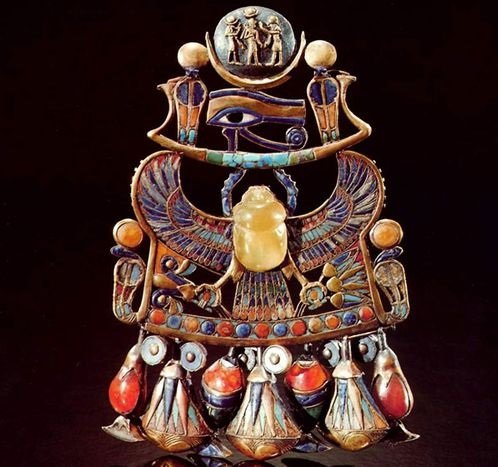
Recent studies have allowed experts to detect zirconium oxide and atoms that form a regular three-dimensional packing in samples of “yellow glass”. These discoveries point to glass formation processes at ultra-high temperatures exceeding 2.2 thousand degrees Celsius and pressures of more than 12 thousand atmospheres.
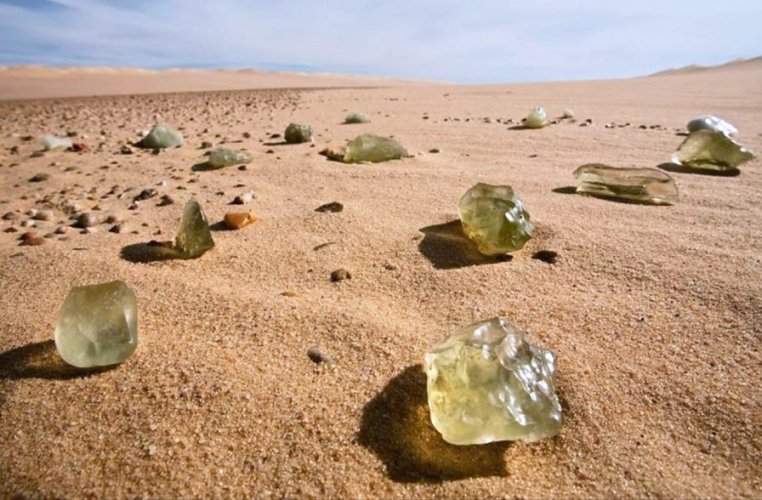
However, it still remains a mystery how the “yellow glass” appeared. There is an assumption that it arose as a result of a collision of a meteorite with the Earth, although the possibility of formation after a nuclear strike is also taken into account, but this option seems less likely. Despite this, we note that there are no meteorite craters in the Libyan Desert, and the closest ones are located quite far from the study area.
Thus, the researchers’ discovery could give new impetus to the study of the mysterious origin of the “yellow glass” of the Libyan Desert, shedding light on the amazing natural processes that occurred on Earth millions of years ago.