

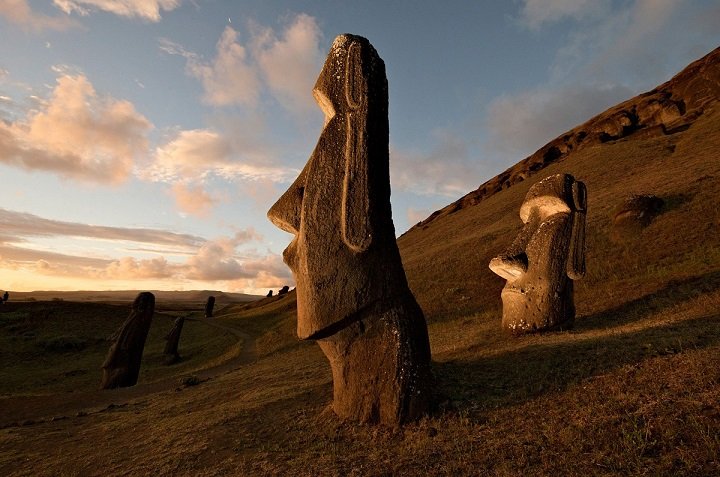
Easter Island, located in the southeastern Pacific Ocean, is shrouded in mystery even in the 21st century. Although some historians believe the island was first settled in the 800s and 900s, scientists still don't know exactly when it was settled. However, one thing is clear - the indigenous population of the island of Rapa Nui experienced several serious crises before they disappeared.
One theory suggests that the Rapa Nui people died out due to the arrival of Europeans, but recent research by Professor Mauricio Lima challenges this view. Fluctuations in sea surface temperatures in the equatorial Pacific Ocean, known as El Niño, played a significant role in the disappearance of the island's inhabitants, Professor Lima said.
El Niño had a major impact on climate and crop yields, and the people of Rapa Nui had to adapt to new methods of food production. During this time, the iconic moai statues were erected, but as weather conditions continued to change, the island's population dwindled.
Recent research suggests that the Rapa Nui people disappeared not because of the arrival of Europeans, but rather because of their struggle for food. As the climate continued to change and crop yields declined, it became increasingly difficult to sustain ourselves. People were forced to take drastic measures to obtain food, but this was not enough to maintain their way of life.
Easter Island remains a fascinating mystery, and its story serves as a cautionary tale about the consequences of environmental degradation and competition for resources. As we face our own challenges related to climate change and food security, we can learn from the mistakes of the past and work to create a more sustainable future.