

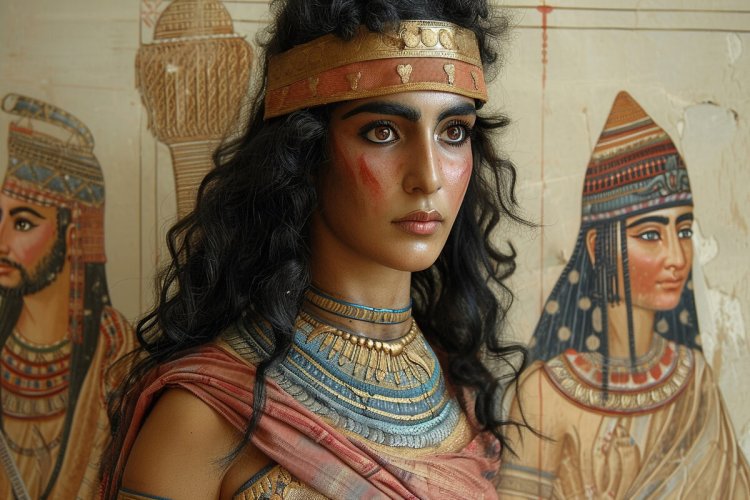
How did the date palm become the “tree of life” for the Sumerians? What did they do with a bad doctor in Ancient Mesopotamia? And what is the meaning of the saying “an eye for an eye”? Today we will go back in time again to talk about the mysterious Sumerians - representatives of the first civilization on earth.
Favorite tree
In the area located between the Tigris and Euphrates rivers, there were many date palms. Dates were stored for a long time, and palm trees turned out to be very hardy trees even in hot climates. The tree itself sheltered the Sumerians from the heat; huts were covered with its leaves, and its fruits were eaten.
The Sumerians noticed a lot of beneficial properties of palm trees. Beer was made from dates! They were also used for medical purposes. Over time, the natives appreciated the full power of the date palm and elevated it to the status of “tree of life.”
Put a stamp
Many historians believe that writing also originated in Ancient Mesopotamia. It is now known as "Sumerian cuneiform". But something else is surprising. Residents of Mesopotamia used seals! Drawings were applied to small stone cylinders. What's interesting is that it's mirrored.
If necessary, the merchant put an imprint on trade “documents” - at that time the Sumerians were already in full use of them. Many cylinders had holes, which meant that seals could be worn around the neck.
This is not good with doctors!
The only area of life where the Sumerians did not show outstanding performance was medicine. Healers actively used the potential of plants. Medicines like mustard and thyme were diluted with other “gifts” of nature - oil or crushed turtle shell. Moreover, all actions were supported by conspiracies. Historians believe that medicine did not develop among the Sumerians because of punishments.
In Ancient Mesopotamia, a doctor could easily have his hand “taken away” if his patient developed complications.
Uncle with big ears
Historians have managed to restore the appearance of the average resident of Ancient Mesopotamia. It turned out that modern representatives of the Caucasian race and the ancient Sumerians are similar. To be more precise, a strong similarity is observed with the Mediterranean type of person.
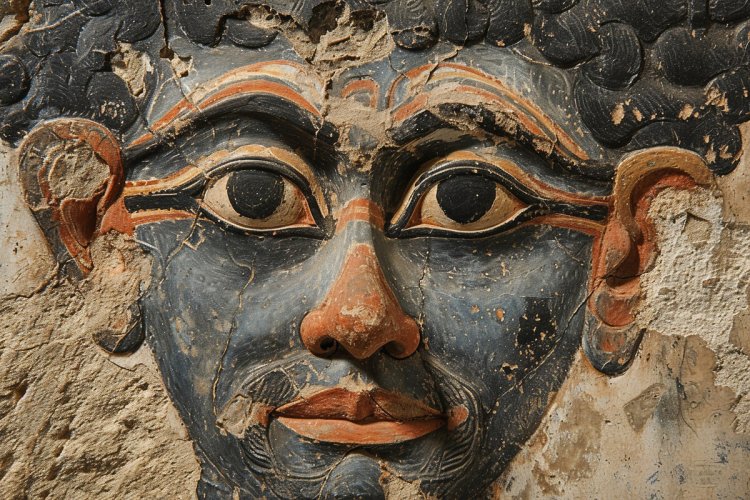
True, the Sumerians themselves always portrayed themselves with distorted facial features. They believed that large ears and eyes were a sign of wisdom. Therefore, in the drawings, the organs of vision and hearing of the Sumerians were enlarged.
Husband and wife
The Sumerians did not have any harems. The man had only one wife, whose marriage was officially registered. Treaty obligations were first negotiated between families on both sides. And only after this the official had the right to legitimize the relationship.
An interesting point: the husband was allowed to sell his other half into bondage, but she was not. Women's rights were limited in Ancient Mesopotamia. But at the same time, history knows cases when a Sumerian widow became the head of a city that was formally ruled by her husband.
"An eye for an eye!"
Hammurabi's code of laws is known not only for its progressiveness. This is where the concept of minimum wage comes from. And this term is still used by the world community. The code pays close attention to physical punishment.
The most famous law states that a person who deprives another person of an eye must do the same. Many historians adhere to the version that a little later the Sumerians began to use a simplified version. “An eye for an eye” - this is how the saying has come down to us.