

On Monday morning, oil prices jumped 30%, surpassing the $100 mark. This is due to the lack of signs of an end to the war against Iran, which has closed the Strait of Hormuz (through which approximately one-fifth of global oil and liquefied natural gas flows pass).
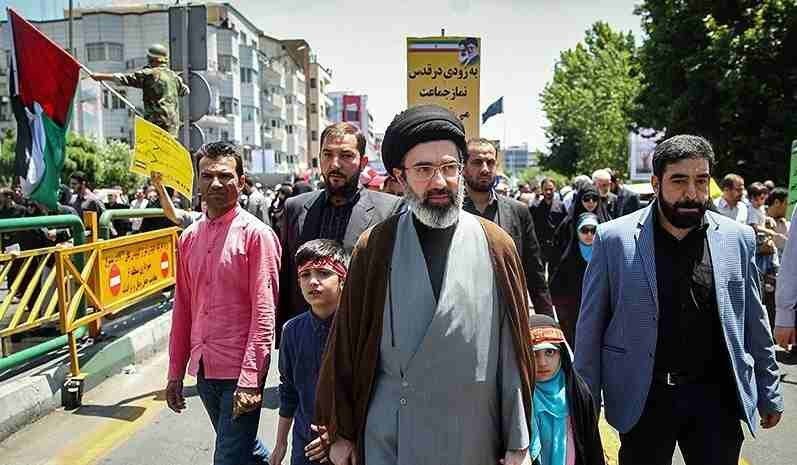
On the contrary, on Monday night, it was announced that Iran had chosen Mojtaba Khamenei (pictured), the son of the assassinated Ali Khamenei, as its new Supreme Leader. Tehran thus ignored Donald Trump's demand to find a leader more acceptable to the United States. Russia is emerging as the main beneficiary of rising prices, analysts say.
Details. The price of Brent crude oil jumped nearly 30% to nearly $120 per barrel, the largest intraday jump since April 2020, while the price of American WTI rose 31%. The price later corrected, with May Brent futures trading around $106 per barrel. The market reacted to a Financial Times report that three G7 countries, including the United States, are discussing the possibility of jointly releasing strategic oil reserves onto the market.
The rise in prices is due to the escalating war in the Middle East. Reuters directly links Monday's rise to the decision of the Iranian Assembly of Experts to appoint Mojtaba Khamenei, the son of Ayatollah Ali Khamenei, who was killed on the first day of the war, as the new Supreme Leader. This will likely anger Trump, the agency believes. As recently as Sunday, the US president said that if the new Supreme Leader doesn't receive Washington's approval, he "won't last long."
Khamenei's appointment was the clearest sign of regime survival in Iran, The Economist writes. Unlike his father, Mojtaba will likely be seen as a figurehead; his appointment demonstrates that the Islamic Revolutionary Guard Corps (IRGC) is in control of the country, the magazine notes. After appointing the new supreme leader, Trump told the Times of Israel: "We'll see what happens."
Other factors. Daniel Hynes, senior commodities strategist at ANZ in Sydney, told Reuters that prices were impacted by reports of oil production cuts in the Middle East.
A comment from Sol Kavonic, head of energy research at MST Marquee, suggests that the market, until Friday, assumed the war would be short-lived and the supply disruptions would be minor: "This is a case of the oil market crying wolf. After three years of rising geopolitical risk premiums that never resulted in supply disruptions, the market has become complacent about current events."
Rising oil prices are exacerbating growing pessimism, said Muyu Xu, senior oil analyst at Kpler: "With the conflict stretching into its second week, and official company statements increasingly indicating preparations for extended supply disruptions, market concerns are only growing." Sydney-based IG analyst Tony Sycamore agreed, attributing the sharp rise to the market's failure to see a way out of the conflict.
If the war continues, oil prices could approach $130-$150 per barrel in another week or two, Muyu Xu believes.
Winners and losers. "In this situation, the main winner will be Russia," believes Rick Wilkinson, CEO of Energyquest. He points out that Russia has unused LNG production capacity and additional oil supply capacity: "The problems in the Middle East are a big win for the Russian oil industry."
At the same time, rising prices are creating problems in the United States, where gasoline prices have risen to their highest since September 2024, and diesel to their highest since November 2023. A sustained rise in gasoline prices could harm Republicans in the November midterm congressional elections, according to analysts cited by Reuters.
Trump himself called the price increase "a very small price to pay for security and peace" and added that they would quickly fall after "the Iranian nuclear threat is eliminated."
Source
On the contrary, on Monday night, it was announced that Iran had chosen Mojtaba Khamenei (pictured), the son of the assassinated Ali Khamenei, as its new Supreme Leader. Tehran thus ignored Donald Trump's demand to find a leader more acceptable to the United States. Russia is emerging as the main beneficiary of rising prices, analysts say.
Details. The price of Brent crude oil jumped nearly 30% to nearly $120 per barrel, the largest intraday jump since April 2020, while the price of American WTI rose 31%. The price later corrected, with May Brent futures trading around $106 per barrel. The market reacted to a Financial Times report that three G7 countries, including the United States, are discussing the possibility of jointly releasing strategic oil reserves onto the market.
The rise in prices is due to the escalating war in the Middle East. Reuters directly links Monday's rise to the decision of the Iranian Assembly of Experts to appoint Mojtaba Khamenei, the son of Ayatollah Ali Khamenei, who was killed on the first day of the war, as the new Supreme Leader. This will likely anger Trump, the agency believes. As recently as Sunday, the US president said that if the new Supreme Leader doesn't receive Washington's approval, he "won't last long."
Khamenei's appointment was the clearest sign of regime survival in Iran, The Economist writes. Unlike his father, Mojtaba will likely be seen as a figurehead; his appointment demonstrates that the Islamic Revolutionary Guard Corps (IRGC) is in control of the country, the magazine notes. After appointing the new supreme leader, Trump told the Times of Israel: "We'll see what happens."
Other factors. Daniel Hynes, senior commodities strategist at ANZ in Sydney, told Reuters that prices were impacted by reports of oil production cuts in the Middle East.
A comment from Sol Kavonic, head of energy research at MST Marquee, suggests that the market, until Friday, assumed the war would be short-lived and the supply disruptions would be minor: "This is a case of the oil market crying wolf. After three years of rising geopolitical risk premiums that never resulted in supply disruptions, the market has become complacent about current events."
Rising oil prices are exacerbating growing pessimism, said Muyu Xu, senior oil analyst at Kpler: "With the conflict stretching into its second week, and official company statements increasingly indicating preparations for extended supply disruptions, market concerns are only growing." Sydney-based IG analyst Tony Sycamore agreed, attributing the sharp rise to the market's failure to see a way out of the conflict.
If the war continues, oil prices could approach $130-$150 per barrel in another week or two, Muyu Xu believes.
Winners and losers. "In this situation, the main winner will be Russia," believes Rick Wilkinson, CEO of Energyquest. He points out that Russia has unused LNG production capacity and additional oil supply capacity: "The problems in the Middle East are a big win for the Russian oil industry."
At the same time, rising prices are creating problems in the United States, where gasoline prices have risen to their highest since September 2024, and diesel to their highest since November 2023. A sustained rise in gasoline prices could harm Republicans in the November midterm congressional elections, according to analysts cited by Reuters.
Trump himself called the price increase "a very small price to pay for security and peace" and added that they would quickly fall after "the Iranian nuclear threat is eliminated."
Source