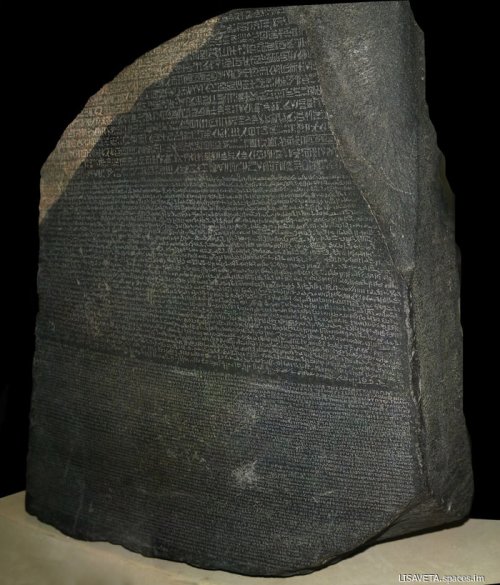
Ancient Egypt is a land of mystery and mystery, and a recent discovery appears to link this ancient civilization to divine powers. The Rosetta Stone, long kept in the British Museum, has revealed its secrets thanks to eerie transcriptions and the persistence of a French scientist. The Daily Star reports.
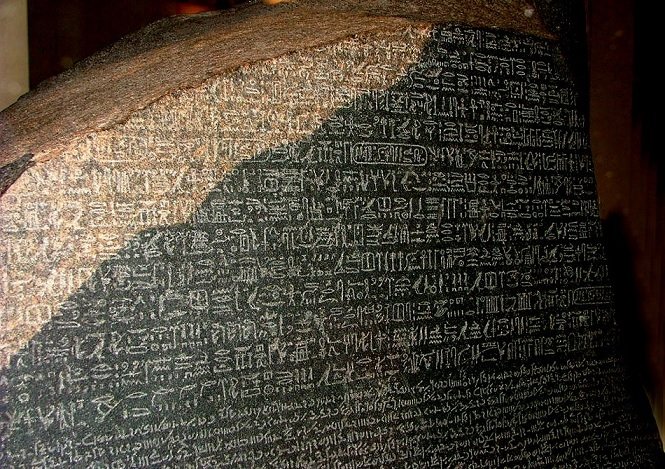
This stone, found in an ancient Egyptian temple, remained undeciphered for a long time. However, according to the latest data, scientists are finally closer to revealing its secret. It all started with 14 lines of hieroglyphic writing on the stone, which indicate the connection between the emperors of Egypt and the gods.
The history of the Rosetta Stone goes back to the era of King Ptolemy V, who reigned more than two thousand years ago. His decrees were inscribed on this stone and posted in ancient temples throughout Egypt. The stone, unfortunately, was broken, and for many years scientists contemplated indecipherable hieroglyphs.
However, in 1822, Thomas Young and Jean-François Champollion took up the task and made a real breakthrough in decoding. They became the first people who were able to understand the “language of the gods.”
Three inscribed sections were discovered on the Rosetta Stone. The top section contained the "language of the gods", which was used for official texts. The remaining two sections were written in the "language of documents" used in everyday life, as well as the ancient Greek language of the last dynasty that ruled Egypt.
It was through Champollion's efforts that the hieroglyphs were successfully translated and the inscriptions claim that Ptolemy V is associated with God. One of the inscriptions reads: “Son of the Sun Ptolemy, ever-living, beloved of Ptah, the god who manifests himself.”
Intensely passionate about his work, Champollion declared: “I belong completely to Egypt, she is my everything.” But this only emphasizes the passion and dedication of the scientists who were able to decipher the “language of the gods.”