Makli Necropolis (primarily 15th - 17th centuries)
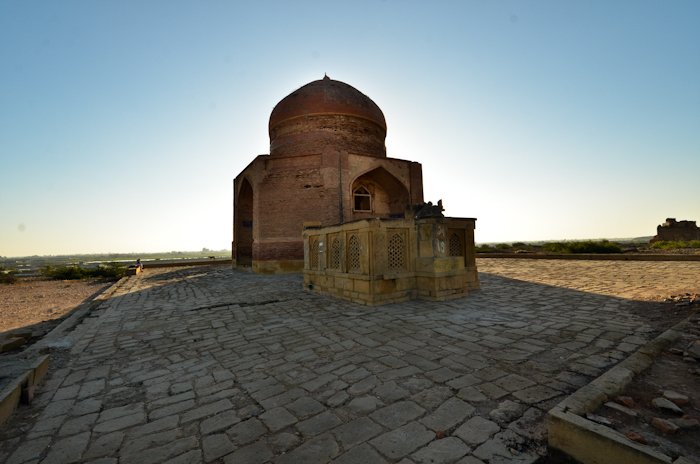
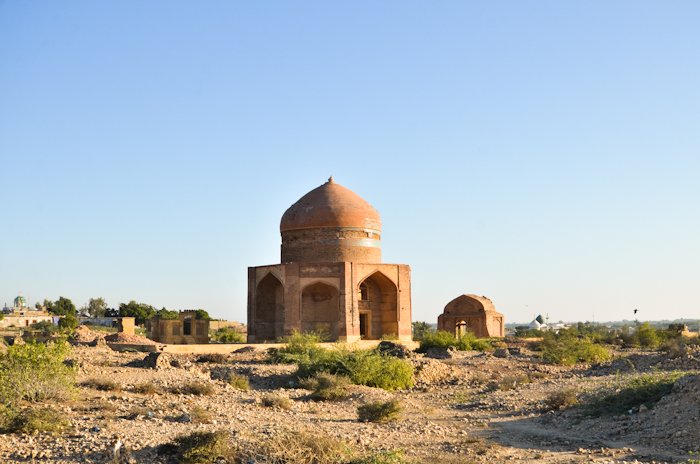
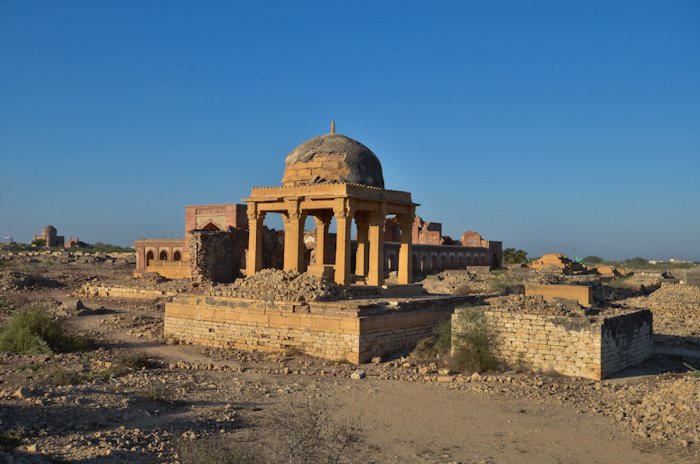
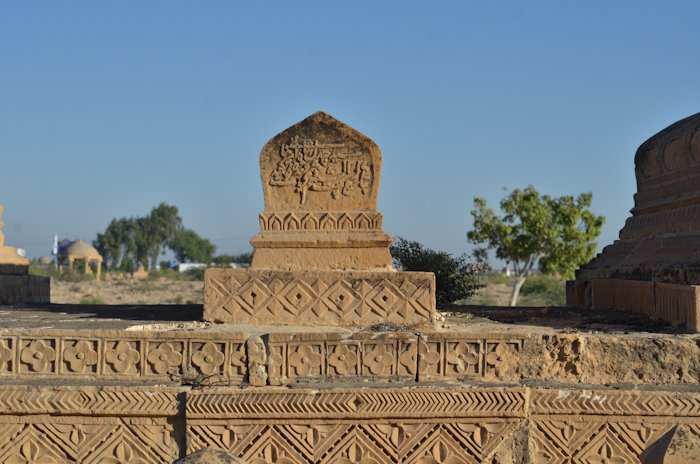
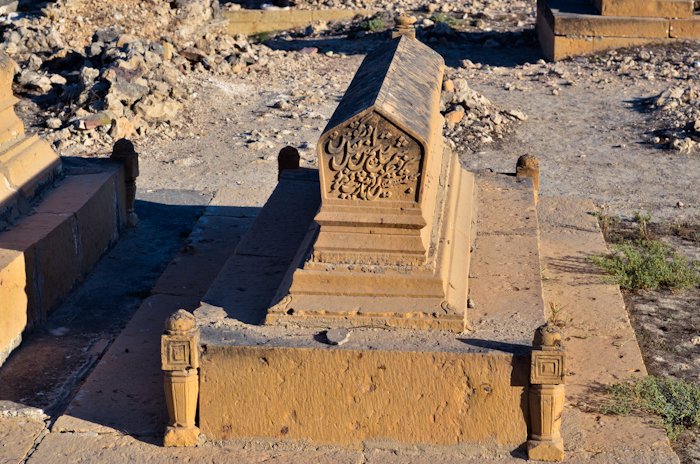
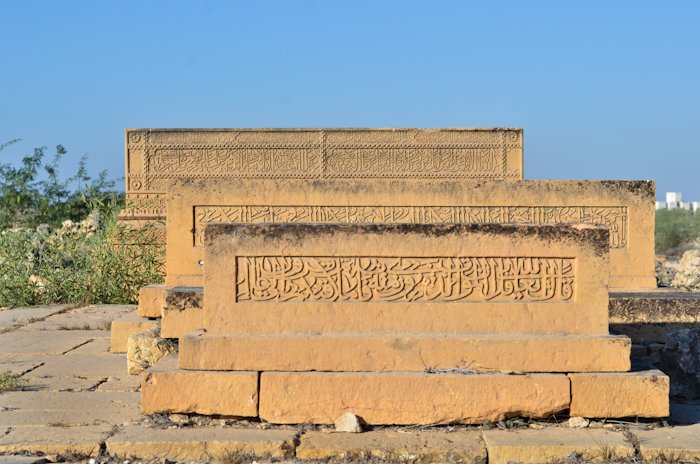
The Makli necropolis is one of the world's largest cemeteries, containing a half million tombs in a 15 square kilometer area. The site is roughly diamond-shaped, with its eastern edge defined by the Makli ridge which gives the site its name. Makli began to be used as a cemetery in the 15th century as the Samma Dynasty (1335-1520) consolidated power. With its capital at Thatta, a mere 5 kilometers to the east, Makli became the favored graveyard of kings, commoners, and all classes in between. Although most of the graves are of modest construction, those along the eastern edge tended to the monumental, with the oldest of the monuments from the Samma dynasty built at the northernmost point. Later rulers including the Arghuns and Tarkans built their tombs further to the south, with the newest and best preserved tombs constructed at the southernmost point of the Makli ridge.The pre-eminent Pakistani architectural historian Ihsan H. Nadiem classifies Makli's monuments into three distinct groups: Groups I, II, and III. The northernmost, and oldest, of the graves are dubbed Group Three, comprising about a dozen significant monuments. The oldest of the ensemble is probably the Madrassah pavilion (chhatri) of Sheikh Isa Langoti, which was likely constructed in the late 14th century. It is an unpretentious structure laid out in a square measuring 6.7 meters on each side, with smaller pillared porches projecting on two of the sides. Although it now lies in ruin, enough of the structure survives to give an idea of how it originally looked.
The most significant monument in Group Three is the tomb of Jam Nizamuddin, who ruled from 1461 to 1509. This unusual building is roughly laid out as a cube, possibly inspired by the cubic form of the Kaaba in Mecca (Makkah). Its square plan measures 11.4 meters on each side and includes a rectangular buttress projection on the western facade measuring 3.3 x 1.3 meters. Buttresses are frequently found on mosques in Gujarat but the one at Jam Nizamuddin's tomb is elaborately decorated with a variety of arches, columns, corbels and other closely spaced architectural elements. Although the buttress is symmetrical, the symmetry of the facade is broken by a door to the right (south) of the buttress and three windows spaced above it. Following accepted Islamic tradition, all ornament on the tomb is based on geometric forms and does not depict living creatures, with one exception: a frieze depicting ducks runs along the western and northern walls. This suggests that the artisans who built the tomb were allowed to draw upon local tradition to a limited extent when executing their designs.
The roof of the tomb is open to the elements as its dome was never built. This is a concern to preservationists as the seasonal monsoons which carry salt air from the Arabian Sea are highly corrosive to the brickwork.
Groups Two and One are located to the south, with Group One at the extreme southern end of the Makli ridge and Group Two in between it and Group Three. Both groups include tombs mostly from the Arghun and Tarkhan period with occasional Samma-era monuments.
The highlight of Group Two is the Tomb of Isa Khan Tarkhan I, who ruled from 1554-1565. This structure is significant as it shows a stylistic break from the monuments of the Samma era with a new form of cenotaph design. The layout of the tomb is rectangular, measuring 30m x 24m, with an outer wall of stone and a mihrab on the west wall. Inside are are a number of separate grave enclosures for the Tarkhan and his royal ladies. The central enclosure, which stands higher than the others, is enclosed by its own wall and mihrab. The inner surfaces of the wall are fully covered with Arabic Quranic verses and other inscriptions in Persian. Within these walls are six stone cenotaphs with Isa Khan's grave being the most prominent. The identities of the other individuals represented by the five surrounding cenotaphs are not known.
Group One, at the southernmost point of the Makli ridge, contains a number of outstanding tombs from the first half of the 17th century. These include:
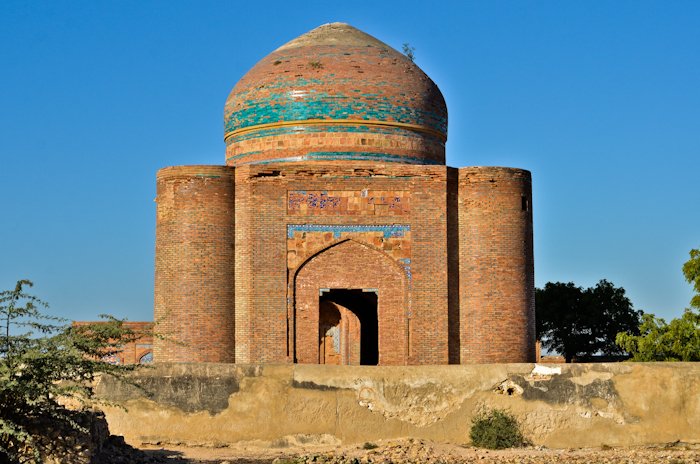
- Diwan Shurfa Khan (died 1638). His blue-tiled, domed tomb with a square base shows clear central-Asian influences. See photos 3-5.
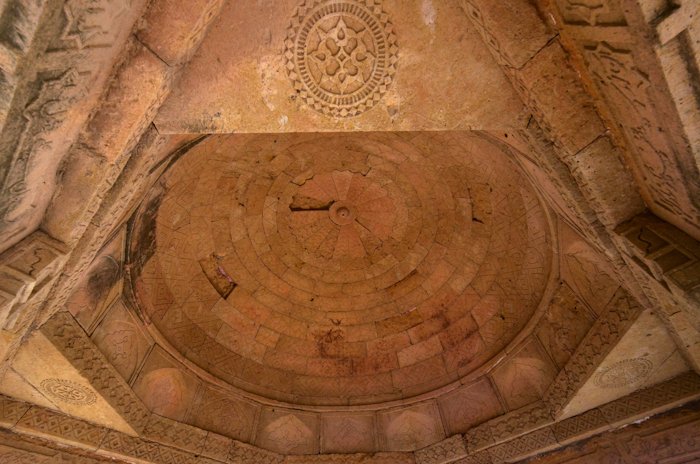
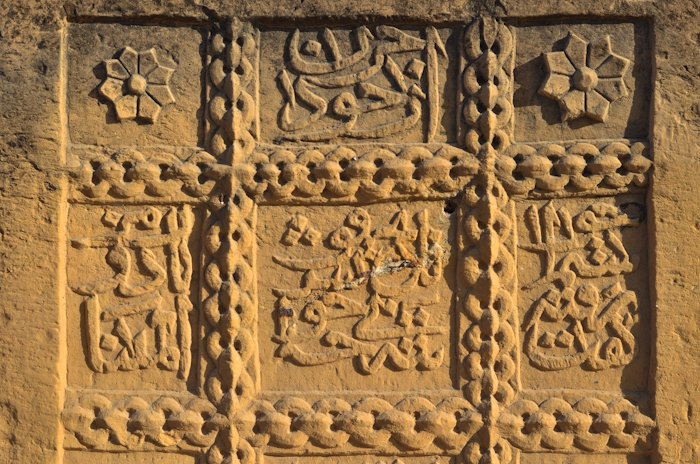
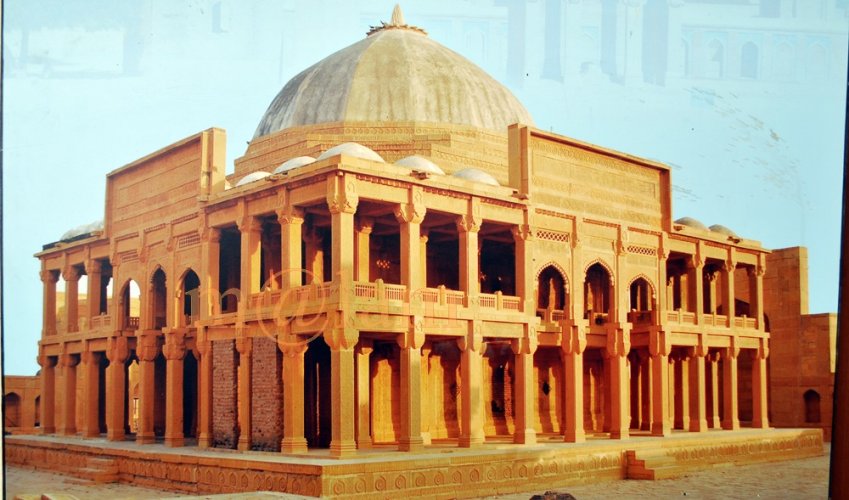
- Mirza Isa Khan Tarkhan II (the Younger) and his father, Jan Baba (b. 1640-44). This enormous square tomb, using imported yellow sandstone from Kathiawar, includes a nine-bay facade capped by central dome. It is unusual for the extensive use of surface tracery which can be found nowhere else in Pakistan. See photos 17-22.
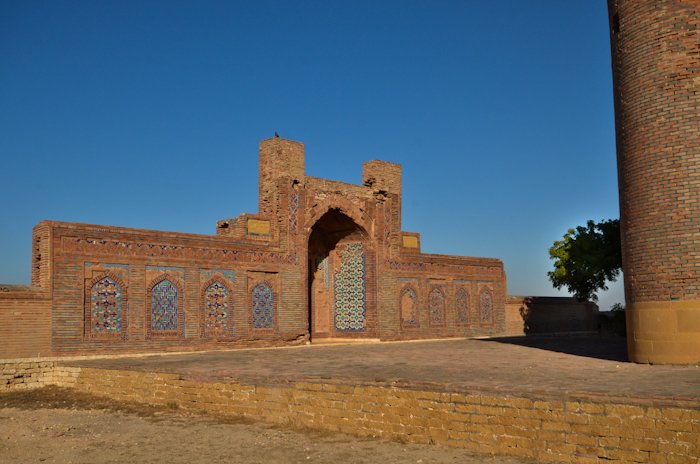
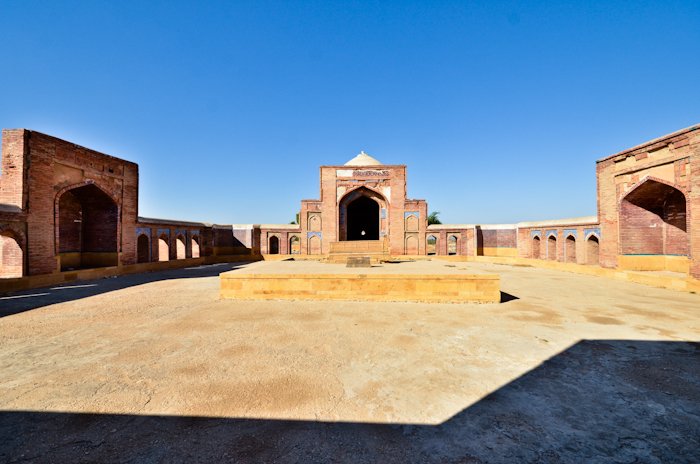
- Baqi Beg Uzbek (b. 1640). This brick tomb is fronted on the east by a 23 x 21m courtyard with iwans (high arched openings) facing each direction. See photo 1.
- Prince Sultan Isa ibn Mirza. This domed octagonal tomb with iwans on each side resembles Mughal-era tombs in Lahore.