


Archaeologists from Turkey have discovered a 2,800-year-old elephant tusk. This unique artifact not only stands as a testament to the ancient masters of art, but also reveals the secrets of the Iron Age settlement of Hattusa.
On the surface of the found tusk, a mythical sphinx with the body of a winged lion and a human head is carved. In addition, images of a real lion and two tall plants, possibly symbolizing the tree of life, were discovered. The artifact measures 30 centimeters in length and 10 centimeters in width, indicating the possible inclusion of the tusk in decorative furniture elements.
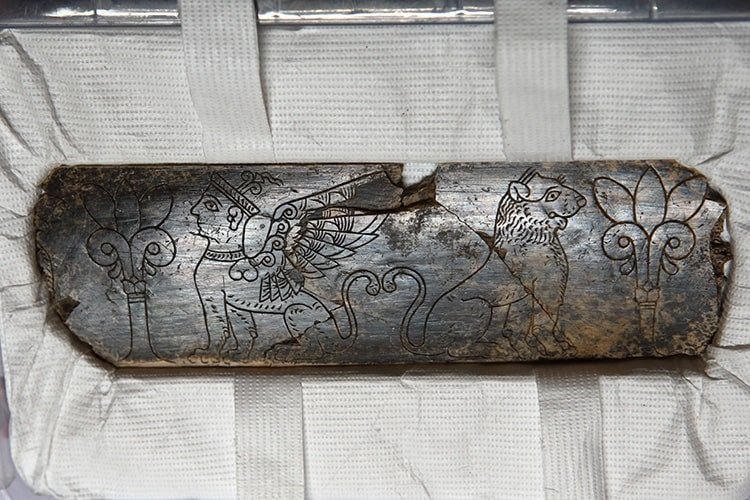
Although the item dates back to the Iron Age, it was discovered in the archaeological layer of the Bronze Age Hittite capital Hattusa. Lead archaeologist Andreas Schachner from the German Archaeological Institute says the discovery confirms the importance of the Iron Age settlement, despite its foundation after a collapse in 1200 BC.
“We discovered that this place was probably not an ordinary town. It appears to have played a key role and may have served as a center of power,” notes Schachner.
Archaeologists plan to conduct further research on the artifact to uncover its historical and cultural significance. After completion of scientific examinations, the tusk will be presented at the Boğazköy Museum.
The artifact is distinguished by highly detailed images, which makes it unique among artifacts from Iron Age settlements. Carved symbols on the tusk can reveal connections between cultures of this period and shed light on the secrets of antiquity.