

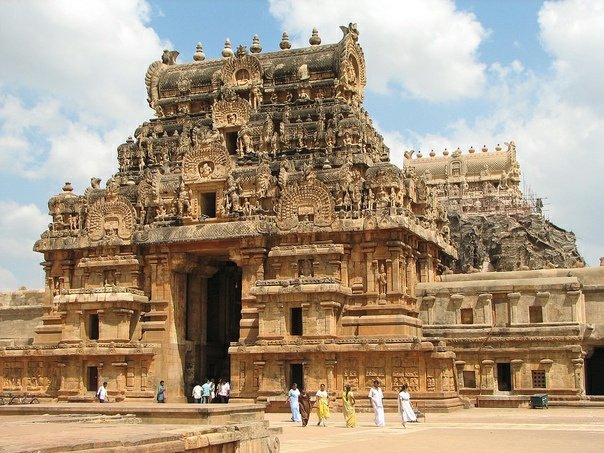
The Chola are a Tamil state in southern India that arose in the 3rd century BC. e. in the valley of the Kaveri River, and after the fall of the Pallava Empire at the end of the 9th century, it extended its power to the whole of Tamil Nadu and the south-eastern tip of the Deccan and lasted until 1279. At the end of the 13th century, the state gradually began to weaken and disintegrate. On its outskirts, former vassal principalities began to gain independence. This is how the states of the Hoysalas in Dorasamunda, the Yadavas in Devagiri, the Kakatyas in Warangal arose, and in the extreme south the ancient state of Pandya was revived. By the end of the 13th century, the Cholas controlled only a small area in the Thanjavur region. Separate branches of the Chola royal house continued to rule small principalities in southern India until the 18th century (in the Tanjore region). During the heyday of the state, the capital was the city of Thanjavur.
The Chola state pursued an aggressive foreign policy, trying to subjugate Ceylon and the Maldives. The economic and military interests of the Chola also included the states of the Malay Archipelago.
The Chola rule in the 10th to 12th centuries was marked by an unprecedented flowering of Tamil literature and the construction of large temple structures, which are included in the World Heritage Sites as “the great temples of the Chola empire.” The influence of the Chola culture can be traced far beyond India, for example, in the Javanese temple complexes of Borobodur and Prambanan.