

Recent discoveries in archeology and genetics allow us to look back and ask: How much has evolution changed us? The answer to this question may lie hidden in archaeological finds and DNA research.
In France (in Bouffia Bonneval, La Chapelle-aux-Saints), priests discovered ancient human remains in 1908, giving scientists a unique glimpse into the life of a Neanderthal man who lived in the area 56,000 years ago.
Experts analyzing the fossils have come to surprising conclusions. The Neanderthal found was an old man suffering from severe periodontal disease, one of the first documented cases of the spread of zoonotic infectious diseases. His skull, thanks to careful preservation, allowed scientists to recreate the appearance of this ancient man.
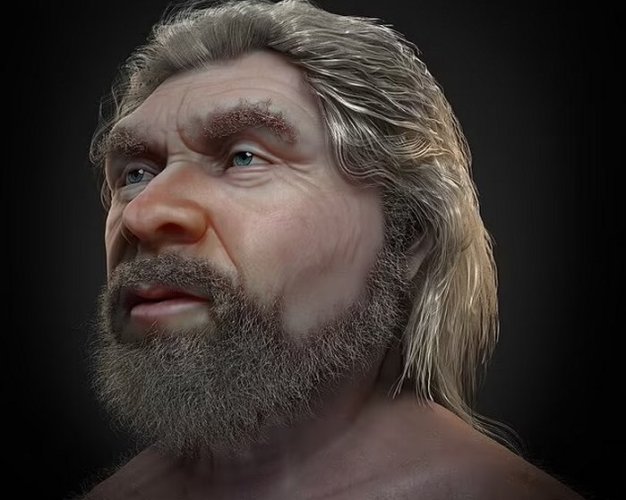
Brazilian graphics expert Cicero Moraes used a CT scan of an ancient skull and compared it with human skulls in a database to create an astonishing facial reconstruction of a French Neanderthal. He revealed many "classic" Neanderthal features, such as a large continuous brow socket, a wide nasal opening, and a long, large ovoid opening.

Finding himself missing several teeth, the “old man” Neanderthal, as scientists called him, represents a unique case of survival from severe illness. Cicero Moraes created two versions of the reconstruction - one more objective and the other more artistic with a beard and hairstyle.
“Reconstructions of Neanderthal faces can vary greatly based on location, age and health. But looking at these images, it’s impossible not to be immersed in the ancient world and wonder about the life of this amazing man thousands of years ago,” Moraes concluded in an interview with Live Science.
These discoveries not only provide a better understanding of our ancestors, but also shed light on surprising aspects of their ancient survival.