

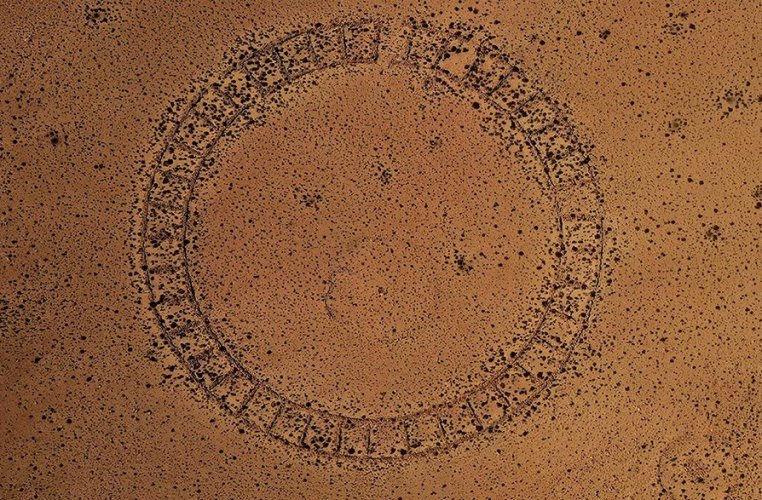
Archaeologists have discovered an amazing circular structure in Vaskiri, near the Bolivian-Chilean border. Researchers say it is a pre-Hispanic ceremonial center with unknown features in the Andes that is unlike any other structure in the region.
The imposing circular structure has a perimeter ring consisting of 39 adjacent buildings, each measuring between 106 and 144 m2, and surrounds an area of approximately 1 hectare. Hilltop sites are linked to agricultural production areas by a variable number of concentric walls on terraces. Artifacts dating from the Late Intermediate and Late Periods indicate that the structure was in use between 1250 and 1600 AD.
According to priest Bartolomé Alvarez, who lived in the 16th century, Vaskiri was the site of religious ceremonies in honor of the Sun, including Inti Raymi, the Inca Sun Festival. This is one of the most important annual Inca ceremonies, which is traditionally celebrated in Cusco on June 24, the winter solstice. The possible similarity of the perimeter walls to the Inca temple system has led archaeologists to speculate that the Incas copied the symbolic architecture of Cusco in the areas they colonized.
Researchers identified 135 hilltop sites connected to agricultural production areas by a variable number of concentric walls on terraces, in a study published in the journal Antiquity. These sites have numerous circular walled structures and funerary towers with patterns, indicating their religious significance.
Archaeologists believe that these sites may have been used for a variety of religious and ritual purposes, including storing grain and performing sacrifices. It is also possible that they played an important role in the management and control of agricultural production areas. Some researchers also suggest that these places could be associated with the cult of the Sun or Moon. However, there is still no clear answer to the question of what exactly these structures were and what their real function was.