

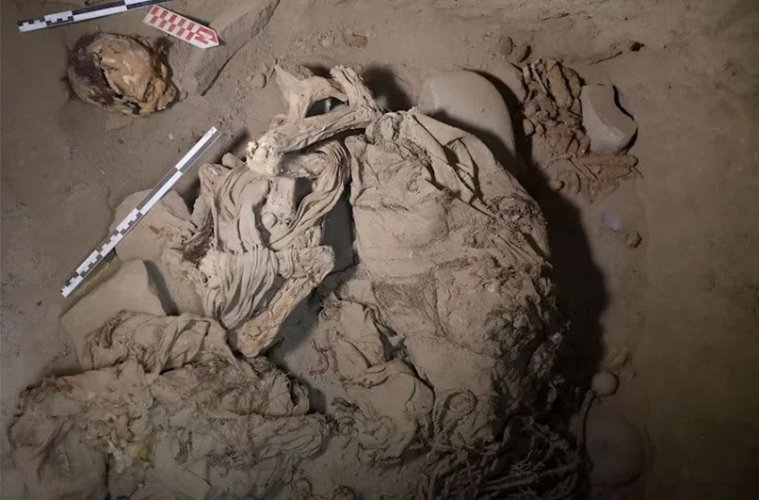
Archaeologists have found a mummy more than 1,000 years old on the outskirts of Peru's capital Lima, which may indicate ritual sacrifices took place in the area. The teenager's mummy was discovered in an underground tomb, wrapped in a burial bundle containing ceramic objects, rope, pieces of leather and hair. Archaeologists believe the mummy is one of 20 buried in the area.
Archaeologists are conducting research at Cajamarquilla excavations to learn more about the culture of the area. Yomira Huaman, in charge of the Cajamarquilla research project, said the teenager's mummy was found in "good condition."
The teenager lived between 1100 and 1200 years ago and may have belonged to the Lima or Ichma cultures. Archaeologists also discovered the ruins of four pyramidal temples and walls laid out almost like a labyrinth.
The way the teenager was buried was different from other mummies discovered in the past. Most of the bodies at Cajamarquilla were found in simple tombs or burial chambers, and the body of a teenager was found in what appeared to be a container.
Archaeologists suggest that these people were killed as ritual sacrifices. Peru was home to a number of pre-Hispanic cultures that flourished centuries before the Inca Empire took power, mainly along the country's central coast and in the Andes. Excavations at Cajamarquilla continue to reveal more information about these cultures and their religious practices. Archaeological finds such as mummies and temple ruins allow scientists to understand the history and culture of ancient civilizations.
One of the main topics that attract the interest of researchers is religious rituals and sacrifices, including mummification. It is known that some cultures that inhabited the territory of modern Peru practiced ritual sacrifices, including human sacrifices that could be mummified after death.
Archaeological finds at Cajamarquilla, including mummies and temple structures, indicate that the area was an important center of ancient culture, probably associated with religious rites. Studying pottery and other artifacts found in tombs and temples can give scientists more information about the lives and beliefs of these ancient civilizations.
Archaeological excavations in Peru continue to attract the attention of researchers and travelers from all over the world. Finds such as mummies, temples and other artifacts reveal the amazing history of this land and help us better understand our ancestors and their cultures.